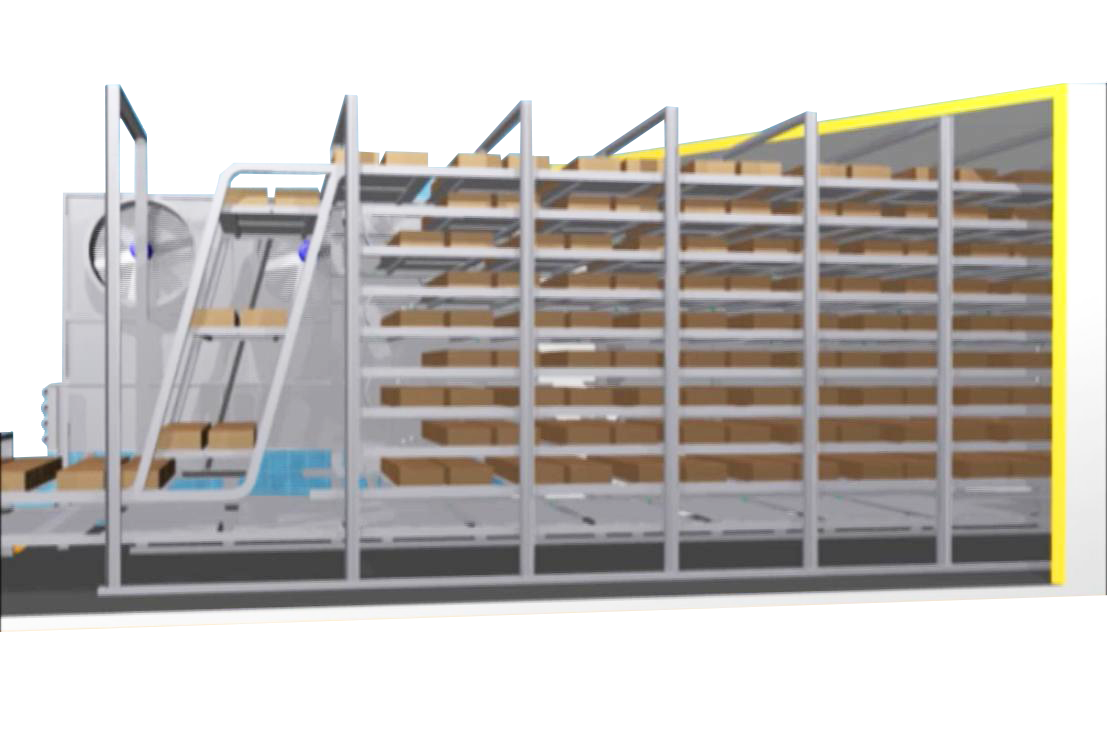
The frozen products of the three-dimensional quick freezing equipment are transported from the outdoor conveyor line to the indoor conveyor line. The loading device pushes the products on the indoor conveyor line to the unit shelves, and the lifting device and loading device fill each layer of the unit shelves according to the program requirements. The lifting device lifts the unit shelves filled with goods to a higher level, and then the pushing device pushes them to the quick freezing area for freezing. After freezing is completed, the unloading device pushes the unit shelf products layer by layer to the indoor conveyor line, and the indoor conveyor line transports the products to the designated place. The product is first in, first out, and the import and export are completed simultaneously, meeting the requirements of automated production. The temperature in the quick freezing area is -35 ℃, the wind field is uniform, tracking freezing is more energy-efficient.
product mix
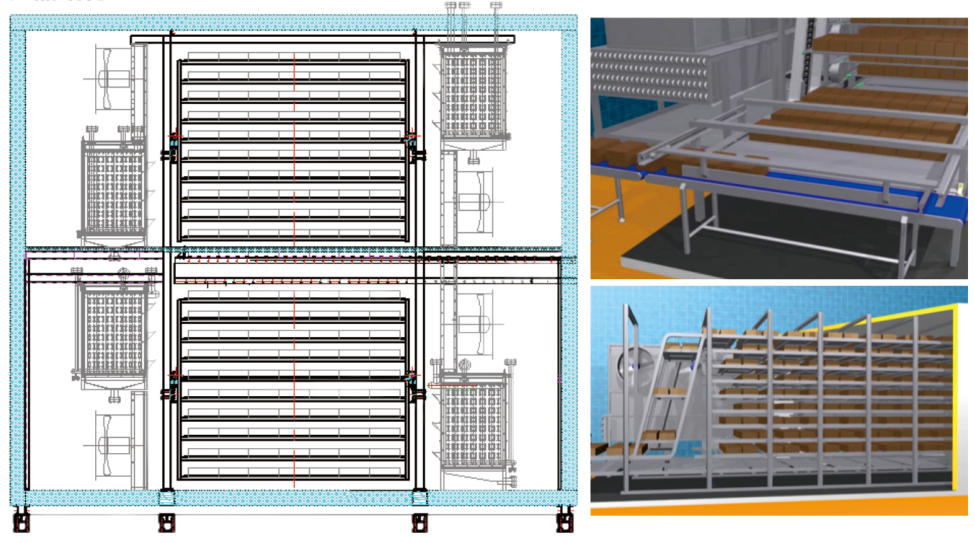
As shown in the figure, the three-dimensional quick freezing equipment breaks through the limitations of traditional flat layout through vertical space intensive design, achieving a production capacity increase of over 400% per unit area. At the same time, it is equipped with an intelligent temperature control system, providing a new quick freezing solution for food processing enterprises with "high density, high speed, and high precision".
Product features:
1. Stereoscopic vertical layout, revolutionary upgrade of space
Modular shelf design: adopting a 4-8 layer vertical structure, supporting customized layer height (15-50cm), adapting to different product thicknesses (such as whole steak, prefabricated vegetable boxes, etc.), and increasing space utilization to 5 times that of traditional equipment.
Bidirectional circulation quick freezing: Cold air circulates through both top-down and bottom-up paths, eliminating temperature blind spots and improving freezing uniformity by 60%.
2. Ultra low temperature instant freezing, locking freshness with zero loss
-40 ℃ deep cold shock technology: A "ice crystal protective film" is formed on the surface of food within 3 minutes to inhibit juice loss, with a dry consumption rate of ≤ 0.5%, which is better than the industry average.
Ice crystal control algorithm: By intelligently adjusting the wind speed (2-8m/) and temperature curve, it ensures that the temperature in the food center quickly drops to -18 ℃ and the cell damage rate is reduced by 70%.
According to the actual needs of the enterprise, further customized technical details or industry-specific solutions can be provided.